Two Ballarat Excursions Worth the Drive from Melbourne
Ballarat is 90 minutes from Melbourne, and most Victorian teachers have thought about taking students there at some point. Here's what Sovereign Hill and the Art Gallery of Ballarat actually offer — and whether they're worth the bus ride.
By Johnny Paul
Published on 30 April 2025
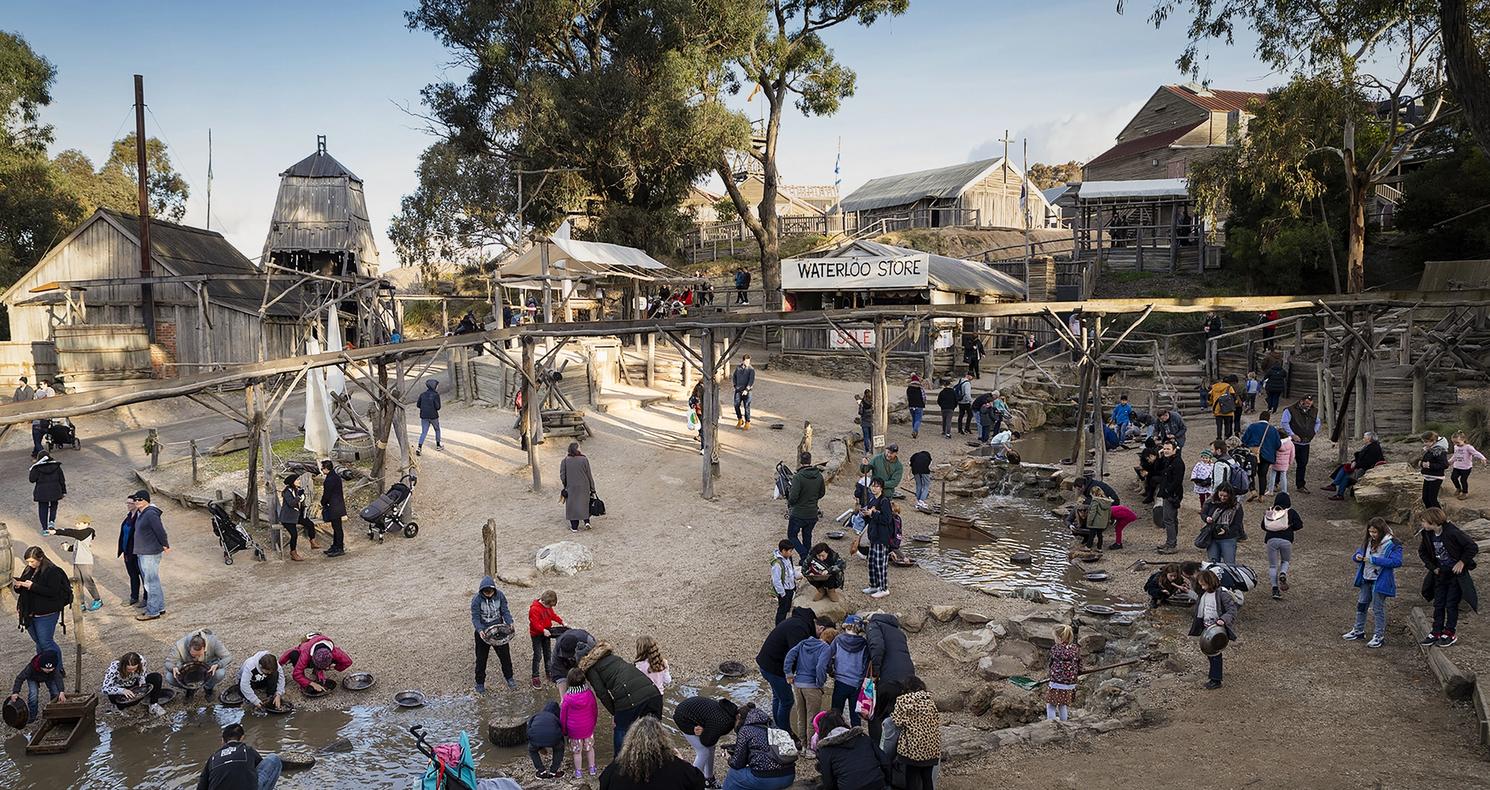
A few years ago, I was talking with a Year 4 teacher who'd just taken her class to Sovereign Hill for the first time.
"I was worried it would feel like a theme park," she said. "You know — dress-ups and vibes, but not much substance. But my students spent 20 minutes watching a woman make candles by hand, asking her questions about what life was actually like in the 1850s. It wasn't performative. It was real."
That's the thing about Sovereign Hill that surprises people. It looks like historical theatre — and in some ways, it is — but it's also a genuinely thoughtful piece of living history. And when you combine it with the Art Gallery of Ballarat, which is a five-minute drive away, you've got a solid regional day trip that covers history, art, and critical thinking without feeling like you're dragging students through a checklist.
If you've been thinking about Ballarat but haven't pulled the trigger yet, here's what you need to know.
Sovereign Hill — what it actually is
Sovereign Hill is a re-created 1850s gold mining town on the outskirts of Ballarat. It's big — 25 hectares — and it's designed to immerse students in what life was like during the Victorian gold rush.
Students can pan for gold (and keep what they find, which is a huge hit). They can go underground into a mine. They can watch blacksmiths, bakers, and candle-makers at work. They can explore schoolhouses, shops, and homes that have been furnished to period accuracy. There's a lot to see, and if you're not careful, it can feel overwhelming.
But here's what makes it work: the people who work there know their stuff. They're not just actors in costume — they're interpreters who understand the history, the context, and the curriculum links. A good guide can turn a walk through the town into a genuine conversation about immigration, labor, wealth, class, and what it meant to be Australian in the 1850s.
The programs are curriculum-aligned for K–10, covering humanities, science, technologies, and the arts. Some teachers use it as a straightforward history excursion. Others tie it into units on economics (what is wealth?), science (mining technology), or geography (why did people come here?).
One primary teacher told me her Year 5s came back with a completely different understanding of what "hard work" meant. Another said her students couldn't stop talking about the conditions in the mine — not because it was scary, but because it made them think about how recent history actually is.
Practical notes: It's a full-day experience. Wear comfortable shoes — there's a lot of walking. Book early, especially in spring and autumn when everyone wants to go. If you've got younger students, the underground mine can be tight and dark, so give them a heads-up. And if it's a hot day, bring hats and water — much of the site is outdoors.

Sovereign Hill Living Museum
Our student experiences are stimulating, immersive and connect to many areas of the curriculum, with a focus on the 1850’s gold rush heritage and the environment. Experiences can be indoors, outdoors, above ground or below ground, providing tremendous variety to ensure a fun and action-packed excursion or camp.
Art Gallery of Ballarat — the quiet gem
The Art Gallery of Ballarat doesn't get the same attention as Sovereign Hill, but it probably should.
It's Australia's oldest regional gallery, and it's got a genuinely impressive collection — Australian colonial art, contemporary works, indigenous pieces, decorative arts. The building itself is beautiful, and there's something about the scale of the place that feels manageable for students. It's not overwhelming. It's intimate.
The education programs are strong. They're designed to develop visual literacy, critical thinking, and creative response. Students don't just look at art — they're asked to interpret it, question it, connect it to their own lives. The facilitators are excellent at scaffolding conversations so that younger students can engage just as meaningfully as older ones.
A few teachers have told me they combine the gallery with Sovereign Hill to give students a more rounded sense of Ballarat's cultural history. You get the lived experience of the gold rush at Sovereign Hill, and then you see how it was represented and remembered through art at the gallery.
The programs are available for K–12 and can be tailored to specific curriculum areas — visual arts, obviously, but also history, English, and even HSIE if you're looking at cultural heritage.
Practical notes: It's much quieter than Sovereign Hill, which can be a relief if you've just spent four hours in a bustling 1850s street. The sessions are typically 60–90 minutes, so it works well as a half-day experience. The gallery is right in central Ballarat, a five-minute drive from Sovereign Hill.

Is it worth the trip?
Here's the honest answer: it depends.
If you're based in Melbourne, Ballarat is 90 minutes each way. That's a three-hour round trip on a bus, plus however long you spend at the sites. For a day trip, it's doable but tight. For an overnight camp, it gives you more breathing room and lets you dig deeper into both experiences.
If you're teaching a unit on Australian history, the gold rush, immigration, or colonial Australia, Sovereign Hill is one of the best hands-on resources you'll find. It's not perfect — it's still a constructed experience, and some aspects are more polished than historically accurate — but it does something textbooks can't. It makes the past tangible.
If you're teaching visual arts or want to add a cultural dimension to your trip, the Art Gallery is an easy addition. It's not flashy, but it's thoughtful, well-run, and gives students a different lens on the same period of history.
A few teachers have told me they skip Sovereign Hill and just do the gallery because their students have already been in primary school. That works too. There's no rule that says you have to do both.
Combining them (or not)
If you are doing both in one day, here's what seems to work:
Start at Sovereign Hill in the morning. It's the bigger, more active experience, and students have more energy early in the day. Have lunch there (or pack your own — there are picnic areas). Then head to the Art Gallery in the afternoon for something quieter and more reflective.
If you're doing an overnight trip, some teachers split it differently: Sovereign Hill on Day 1, Art Gallery on Day 2, with time in between for rest, reflection, or exploring Ballarat itself (which has some lovely parks and architecture if you've got the time).
But again — you don't have to do both. If one suits your unit better, just do that one.
Final thoughts
Ballarat isn't trying to compete with Melbourne. It's quieter, slower, and more focused. But that's part of what makes it work as a school excursion destination.
It's manageable. The sites are close together. The programs are well-designed. And for teachers who want to give students an experience of Australian history that goes beyond worksheets and videos, it's one of the better options in regional Victoria.
Will every student love it? Probably not. But the ones who do — the ones who get caught up in panning for gold or staring at a painting for five full minutes trying to work out what it means — those students will remember it.
And that's usually worth the bus ride.
'%3e%3cpath%20d='M12%2021C16.9706%2021%2021%2016.9706%2021%2012C21%207.02944%2016.9706%203%2012%203C7.02944%203%203%207.02944%203%2012C3%2016.9706%207.02944%2021%2012%2021Z'%20stroke='%23FEFDFB'%20stroke-width='1.5'%20stroke-linecap='round'%20stroke-linejoin='round'/%3e%3cpath%20d='M15.75%208.25H14.25C13.6533%208.25%2013.081%208.48705%2012.659%208.90901C12.2371%209.33097%2012%209.90326%2012%2010.5V21'%20stroke='%23FEFDFB'%20stroke-width='1.5'%20stroke-linecap='round'%20stroke-linejoin='round'/%3e%3cpath%20d='M9%2013.5H15'%20stroke='%23FEFDFB'%20stroke-width='1.5'%20stroke-linecap='round'%20stroke-linejoin='round'/%3e%3c/g%3e%3cdefs%3e%3cclipPath%20id='clip0_1_616'%3e%3crect%20width='24'%20height='24'%20fill='white'/%3e%3c/clipPath%3e%3c/defs%3e%3c/svg%3e)
'%3e%3cpath%20d='M13.3332%2017.5001C15.6344%2017.5001%2017.4998%2015.6346%2017.4998%2013.3334C17.4998%2011.0322%2015.6344%209.16675%2013.3332%209.16675C11.032%209.16675%209.1665%2011.0322%209.1665%2013.3334C9.1665%2015.6346%2011.032%2017.5001%2013.3332%2017.5001Z'%20stroke='%23FEFDFB'%20stroke-width='1.66667'%20stroke-miterlimit='10'/%3e%3cpath%20d='M18.3335%203.33325H8.3335C5.57207%203.33325%203.3335%205.57183%203.3335%208.33325V18.3333C3.3335%2021.0947%205.57207%2023.3333%208.3335%2023.3333H18.3335C21.0949%2023.3333%2023.3335%2021.0947%2023.3335%2018.3333V8.33325C23.3335%205.57183%2021.0949%203.33325%2018.3335%203.33325Z'%20stroke='%23FEFDFB'%20stroke-width='1.66667'%20stroke-linecap='round'%20stroke-linejoin='round'/%3e%3cpath%20d='M18.75%209.16675C19.4404%209.16675%2020%208.6071%2020%207.91675C20%207.22639%2019.4404%206.66675%2018.75%206.66675C18.0596%206.66675%2017.5%207.22639%2017.5%207.91675C17.5%208.6071%2018.0596%209.16675%2018.75%209.16675Z'%20fill='%23FEFDFB'/%3e%3c/g%3e%3cdefs%3e%3cclipPath%20id='clip0_36_178'%3e%3crect%20width='26.6667'%20height='26.6667'%20fill='white'/%3e%3c/clipPath%3e%3c/defs%3e%3c/svg%3e)
'%3e%3cpath%20d='M20.25%203H3.75C3.33579%203%203%203.33579%203%203.75V20.25C3%2020.6642%203.33579%2021%203.75%2021H20.25C20.6642%2021%2021%2020.6642%2021%2020.25V3.75C21%203.33579%2020.6642%203%2020.25%203Z'%20stroke='%23FEFDFB'%20stroke-width='1.5'%20stroke-linecap='round'%20stroke-linejoin='round'/%3e%3cpath%20d='M11.25%2010.5V16.5'%20stroke='%23FEFDFB'%20stroke-width='1.5'%20stroke-linecap='round'%20stroke-linejoin='round'/%3e%3cpath%20d='M8.25%2010.5V16.5'%20stroke='%23FEFDFB'%20stroke-width='1.5'%20stroke-linecap='round'%20stroke-linejoin='round'/%3e%3cpath%20d='M11.25%2013.125C11.25%2012.4288%2011.5266%2011.7611%2012.0188%2011.2688C12.5111%2010.7766%2013.1788%2010.5%2013.875%2010.5C14.5712%2010.5%2015.2389%2010.7766%2015.7312%2011.2688C16.2234%2011.7611%2016.5%2012.4288%2016.5%2013.125V16.5'%20stroke='%23FEFDFB'%20stroke-width='1.5'%20stroke-linecap='round'%20stroke-linejoin='round'/%3e%3cpath%20d='M8.25%209C8.87132%209%209.375%208.49632%209.375%207.875C9.375%207.25368%208.87132%206.75%208.25%206.75C7.62868%206.75%207.125%207.25368%207.125%207.875C7.125%208.49632%207.62868%209%208.25%209Z'%20fill='%23FEFDFB'/%3e%3c/g%3e%3cdefs%3e%3cclipPath%20id='clip0_1_621'%3e%3crect%20width='24'%20height='24'%20fill='white'/%3e%3c/clipPath%3e%3c/defs%3e%3c/svg%3e)