We Took Our Year 4 Class to Garrigarrang at the Australian Museum - Here's What Happened
The Australian Museum's educator-led program kept coming up in staff room conversations. "It's different," one colleague told me. "The kids actually listen." That was enough. I booked it for a Wednesday morning, sent permission notes home, and started preparing my class for what it means to learn on someone else's Country.
Published on 24 November 2025
Why We Chose This Excursion
I'll be honest: I'd been thinking about the Garrigarrang program for a while. We were working through our First Contacts unit, and I wanted something more than pictures in textbooks. I needed my Year 4s to hear First Nations voices directly — not filtered through me, not reduced to comprehension questions. But I was curious: would the program hold their attention? Would it feel genuine?
The Australian Museum's educator-led program kept coming up in staff room conversations. "It's different," one colleague told me. "The kids actually listen." That was enough. I booked it for a Wednesday morning, sent permission notes home, and started preparing my class for what it means to learn on someone else's Country.
What Happened: The Full Experience
We loaded onto the bus at 9am — always an event in itself — and arrived at the museum just after 9:45 am. The building's grand entrance settled the students almost immediately. There's something about walking into a big cultural space that shifts energy.
Our First Nations educator met us near the entrance with a warmth that put everyone at ease. The Garrigarrang program runs for about 45 minutes, which I'd worried might feel long for eight and nine-year-olds. It didn't.
The educator began by acknowledging Country, then asked students what they thought "Garrigarrang" meant. A few hands shot up. "The harbour?" one student guessed. Close — it's the Gadigal name for Sydney Cove, but it carries so much more: Sea Country, a living relationship between people, water, land and sky.
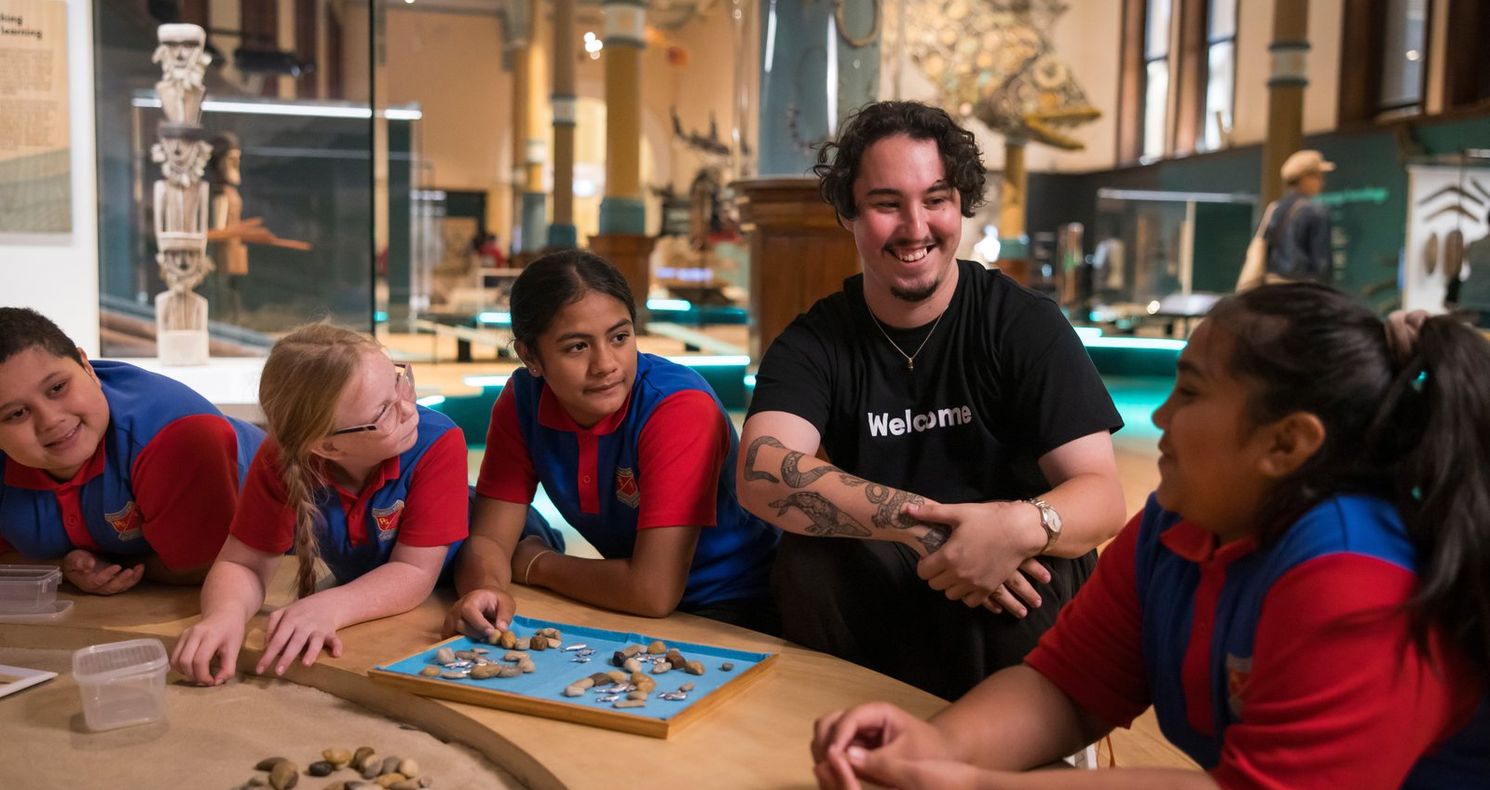
What struck me was how interactive it felt. Students passed around fishing hooks made from shells, examined tools, listened to stories about reading tides and seasons. The educator explained how caring for Sea Country isn't just about not littering — it's about understanding cycles, taking only what you need, giving back. "If you look after Country, Country looks after you," they said simply.
Yes. It really does.
We moved through the First Nations galleries, pausing at displays that suddenly felt meaningful rather than decorative. The educator pointed out shell middens — evidence of sustainable fishing practices over tens of thousands of years. They talked about seasonal calendars, the science of observing water, the protocols around harvest. Surprisingly, my students were genuinely engaged, asking thoughtful questions.
We finished with a reflection circle. Students shared one thing that surprised them. Several said they hadn't realised how much First Nations people knew about science. That moment reminded me exactly why we'd come.
After the program, we had lunch in the Domain — just a ten-minute walk away. The open space was welcomed and the chance to chat informally about what we'd learned — what a great morining!
What Students Learned
The curriculum connections were clear, but what students actually took away felt deeper. They understood that First Nations knowledge isn't something from the past — it's living wisdom that offers real solutions to how we care for our environment today. They grasped that Sea Country isn't just a poetic phrase; it's a practical, scientific relationship with water and land.
Several students made connections to things we'd been learning about sustainability and ecosystems.
The stories mattered too. Students remembered the narratives — how people read the harbour, why certain practices protected fish populations, how cultural knowledge and environmental care were always connected.
What Surprised Us
I expected my students to be interested. I didn't expect them to be so quiet at certain moments. When the educator was sharing a story about learning from their grandmother, my usually chatty class went completely still. That kind of listening is rare with Year 4s, and it told me they understood they were hearing something important.
I felt well-supported as a teacher. The pre-visit resources were helpful, but the worksheets were standard and I feel didn't match the quality of the experience. The post-visit materials gave us solid follow-up lessons (would love for them to have a bit more'lesson planned' structure - we can dream!) but it felt like a genuine partnership.
Logistically, the Domain saved us for lunch. It's close, spacious, and gives students the movement break they need after focused learning. We didn't feel rushed or stressed about finding somewhere to eat - Hyde Park looked like a good option, also.
Tips for Other Teachers
Book early. It is a reasonably new program - but the Australian Museum fills up quickly. I booked about 6 weeks ahead and had decent time slot options.
Prepare students thoughtfully. We talked about what it means to listen respectfully and why First Nations educators share their knowledge.
Plan for Domain lunch. It's an easy walk and a nice extension of the learning. Pack rubbish bags and remind students about caring for Country — it becomes a practical teaching moment.
Save time for reflection back at school. We spent the next few lessons unpacking what students learned. That's where deeper understanding happened — when they could connect the experience to our classroom work.
Would I do it again? Definitely, some excursions feel like logistics exercises. This one felt like genuine learning — the kind that stays with students long after the permission notes are filed away.
Your Turn
Every excursion has a story — the moment students made an unexpected connection, the logistical detail that saved the day, the venue that exceeded expectations (or didn't!). If you've got one to share, we'd love to hear it. Email teachers@edtripper.com and let's talk.
'%3e%3cpath%20d='M12%2021C16.9706%2021%2021%2016.9706%2021%2012C21%207.02944%2016.9706%203%2012%203C7.02944%203%203%207.02944%203%2012C3%2016.9706%207.02944%2021%2012%2021Z'%20stroke='%23FEFDFB'%20stroke-width='1.5'%20stroke-linecap='round'%20stroke-linejoin='round'/%3e%3cpath%20d='M15.75%208.25H14.25C13.6533%208.25%2013.081%208.48705%2012.659%208.90901C12.2371%209.33097%2012%209.90326%2012%2010.5V21'%20stroke='%23FEFDFB'%20stroke-width='1.5'%20stroke-linecap='round'%20stroke-linejoin='round'/%3e%3cpath%20d='M9%2013.5H15'%20stroke='%23FEFDFB'%20stroke-width='1.5'%20stroke-linecap='round'%20stroke-linejoin='round'/%3e%3c/g%3e%3cdefs%3e%3cclipPath%20id='clip0_1_616'%3e%3crect%20width='24'%20height='24'%20fill='white'/%3e%3c/clipPath%3e%3c/defs%3e%3c/svg%3e)
'%3e%3cpath%20d='M13.3332%2017.5001C15.6344%2017.5001%2017.4998%2015.6346%2017.4998%2013.3334C17.4998%2011.0322%2015.6344%209.16675%2013.3332%209.16675C11.032%209.16675%209.1665%2011.0322%209.1665%2013.3334C9.1665%2015.6346%2011.032%2017.5001%2013.3332%2017.5001Z'%20stroke='%23FEFDFB'%20stroke-width='1.66667'%20stroke-miterlimit='10'/%3e%3cpath%20d='M18.3335%203.33325H8.3335C5.57207%203.33325%203.3335%205.57183%203.3335%208.33325V18.3333C3.3335%2021.0947%205.57207%2023.3333%208.3335%2023.3333H18.3335C21.0949%2023.3333%2023.3335%2021.0947%2023.3335%2018.3333V8.33325C23.3335%205.57183%2021.0949%203.33325%2018.3335%203.33325Z'%20stroke='%23FEFDFB'%20stroke-width='1.66667'%20stroke-linecap='round'%20stroke-linejoin='round'/%3e%3cpath%20d='M18.75%209.16675C19.4404%209.16675%2020%208.6071%2020%207.91675C20%207.22639%2019.4404%206.66675%2018.75%206.66675C18.0596%206.66675%2017.5%207.22639%2017.5%207.91675C17.5%208.6071%2018.0596%209.16675%2018.75%209.16675Z'%20fill='%23FEFDFB'/%3e%3c/g%3e%3cdefs%3e%3cclipPath%20id='clip0_36_178'%3e%3crect%20width='26.6667'%20height='26.6667'%20fill='white'/%3e%3c/clipPath%3e%3c/defs%3e%3c/svg%3e)
'%3e%3cpath%20d='M20.25%203H3.75C3.33579%203%203%203.33579%203%203.75V20.25C3%2020.6642%203.33579%2021%203.75%2021H20.25C20.6642%2021%2021%2020.6642%2021%2020.25V3.75C21%203.33579%2020.6642%203%2020.25%203Z'%20stroke='%23FEFDFB'%20stroke-width='1.5'%20stroke-linecap='round'%20stroke-linejoin='round'/%3e%3cpath%20d='M11.25%2010.5V16.5'%20stroke='%23FEFDFB'%20stroke-width='1.5'%20stroke-linecap='round'%20stroke-linejoin='round'/%3e%3cpath%20d='M8.25%2010.5V16.5'%20stroke='%23FEFDFB'%20stroke-width='1.5'%20stroke-linecap='round'%20stroke-linejoin='round'/%3e%3cpath%20d='M11.25%2013.125C11.25%2012.4288%2011.5266%2011.7611%2012.0188%2011.2688C12.5111%2010.7766%2013.1788%2010.5%2013.875%2010.5C14.5712%2010.5%2015.2389%2010.7766%2015.7312%2011.2688C16.2234%2011.7611%2016.5%2012.4288%2016.5%2013.125V16.5'%20stroke='%23FEFDFB'%20stroke-width='1.5'%20stroke-linecap='round'%20stroke-linejoin='round'/%3e%3cpath%20d='M8.25%209C8.87132%209%209.375%208.49632%209.375%207.875C9.375%207.25368%208.87132%206.75%208.25%206.75C7.62868%206.75%207.125%207.25368%207.125%207.875C7.125%208.49632%207.62868%209%208.25%209Z'%20fill='%23FEFDFB'/%3e%3c/g%3e%3cdefs%3e%3cclipPath%20id='clip0_1_621'%3e%3crect%20width='24'%20height='24'%20fill='white'/%3e%3c/clipPath%3e%3c/defs%3e%3c/svg%3e)